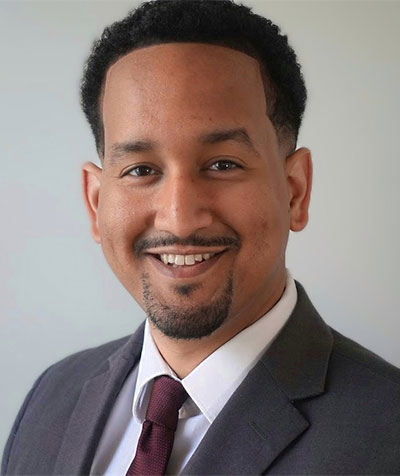
About Me
I'm a first-generation Eritrean-American, born and raised in Houston, a city shaped by many cultures.
Growing up in that environment taught me early on that identity is layered and personal. My name, Fenan (ፍናን), translates to "morale" or "pride," a meaning that reflects the values I try to carry with me in both my life and my work.
Clinical Work
In my clinical practice, I see culture as central to care. A person's background influences how they experience illness, healing, and the healthcare system itself. I aim to approach each patient with curiosity, respect, and cultural humility. By listening carefully to their experiences and priorities, I work to provide care that is thoughtful, evidence-based, and responsive to who they are.
My clinical focus is providing evidence-based psychological treatments for patients experiencing chronic pain, adjustment to illness or disability, and co-occurring mental health symptomology in the outpatient interdisciplinary rehabilitation settings.
Research
My research grew out of a simple question: why do some people get good pain care and others don't?
At Johns Hopkins, I study what happens between identifying a need for evidence-based pain or rehabilitation care and a patient receiving enough treatment to benefit. I examine the steps along that pathway: how treatment needs are recognized, how patients are connected with care, who begins treatment, who stays engaged, and how clinicians use information to guide what happens next.
My work brings together health services research, patient-centered measurement, and implementation science. I study how referral pathways, treatment delivery, health system workflows, insurance, community context, patient preferences, digital tools, and clinical measurement shape access to and engagement with evidence-based care.
Some of these challenges arise before treatment is ever offered. Others emerge during referral, scheduling, treatment initiation, or continued participation in care. Still others occur when useful clinical information is collected but does not meaningfully inform treatment decisions.
My long-term goal is to develop and test practical strategies that improve how patients are identified for appropriate care, connected with treatment, supported in staying engaged, and ultimately able to receive care that improves their health and functioning.
Education & Training
- BS, Psychology - Texas A&M University (2011)
- MS, Clinical Psychology - Texas A&M University (2016)
- PhD, Clinical Psychology - Texas A&M University (2020)
- Predoctoral Internship - Baylor College of Medicine (2020)
- Postdoctoral Fellowship - Johns Hopkins School of Medicine (2022)
- Licensed Clinical Psychologist - State of Maryland (#06832)